New publication by Leslie Barnes: Reckoning with Forced Marriage in the Era of #MeToo

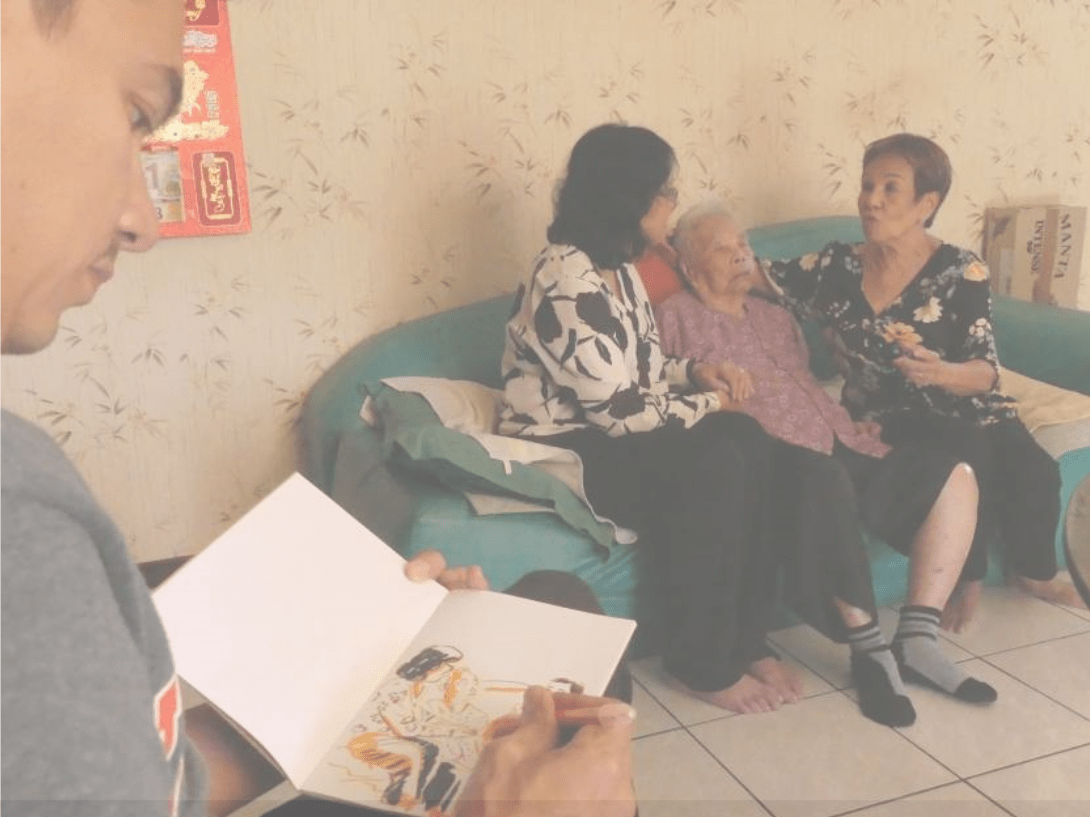
Focused on the experience and legacies of the Khmer Rouge marriage policy, this essay examines Cambodia’s culture of silence surrounding gender-based violence in the era of #MeToo and highlights a set of cultural responses that confront silence, countering it with a multifaceted mode of expression that aims to unite survivors across communities, generations, and experiences. Spanning a range of media, including documentary cinema, the plastic arts, and classical Khmer dance, the “language” emerging in these responses is at once restrained and excessive, naming the experience of assault in the public sphere without creating an imperative to speak publicly. More importantly, it offers a multimedial, polyvocal means through which survivors of gender-based violence see their traumas recognized and shared by the broader collective. These initiatives offer a culturally situated, restorative approach to addressing gender-based violence, past and present, that stands in productive contrast with the largely retributive #MeToo movement. 

Read the article: Leslie Barnes, “Reckoning with Forced Marriage in the Era of #MeToo: Silence and Gender-based Violence in the Cambodian Arts”.

Image: San Nan, Woman and Memories; Photograph, Van Channarong/Bophana Center 

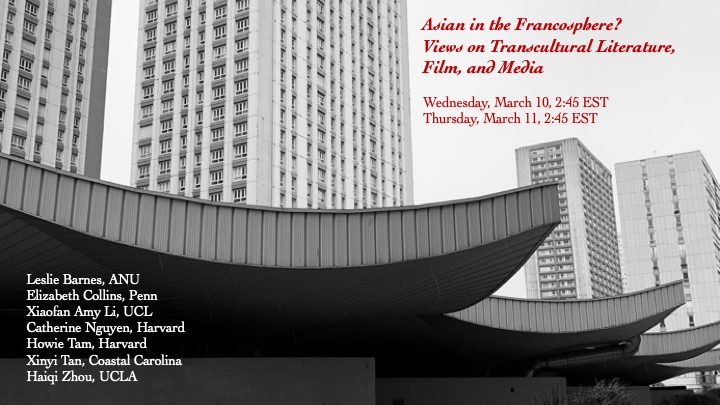
ASERN at the 20th and 21st French and Francophone Studies Conference

Organized by ASERN members Elizabeth Collins and Howie Tam, and including papers by Leslie Barnes and Catherine Nguyen, this panel spanned cultures and continents, exploring connections, perspectives, and solidarities among francophone Asian writers, filmmakers, artists, and activists in the Francosphere today. What might it mean to be “Asian” in the francophone world, and how are these questions considered in literature, cinema, bandes-dessinées, digital media, and other aesthetic forms? How have events such as the defence of universalist republicanism  in the aftermath of the death of Samuel Paty and the rise of anti-Asian racism and violence in the wake of the COVID-19 pandemic sharpened this focus? 

Asian in the Francosphere? Views on Transcultural Literature, Film, and Media:

  • Xinyi Tan (Coastal Carolina University): “Thinking beyond the French-Francophone dichotomy: the literary identities of François Cheng, Ying Chen, Shan Sa, and Kim Thúy” 
  • Howie Tam (Harvard University): “Diasporic Return and Search for Worldly Home in Anna Moï’s L’année du cochon de feu
  • Xiaofan Amy Li (University College London): ”East Asia and Francophone Writing”  
  • Elizabeth Collins (University of Pennsylvania): ”‘#AsiatiquesDeFrance’: Confronting Anti-Asian Racism in Contemporary France through Digital Media”
  • Leslie Barnes (Australian National University) ”Smoke and Mirrors: Sex Work and Rithy Panh’s Cinematic Image” 
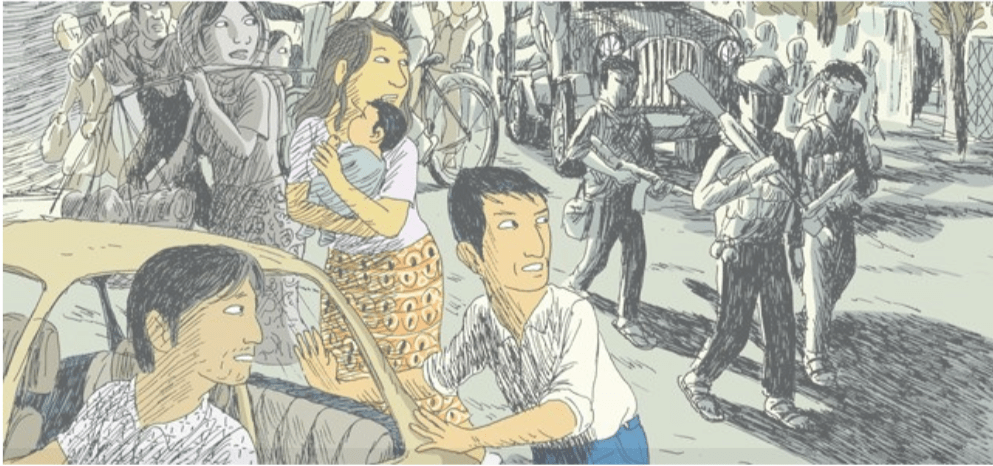
  • Catherine Nguyen (Harvard University): ”Drawing Little Wars in Marcelino Truong’s Graphic Memoirs” 
  • Haiqi Zhou (University of California, Los Angeles): ”Frédéric Chau: (Dis)Appearance of the Chinese Community in French Cinema” 

New publication by Howie Tam: Literary Nationalisms

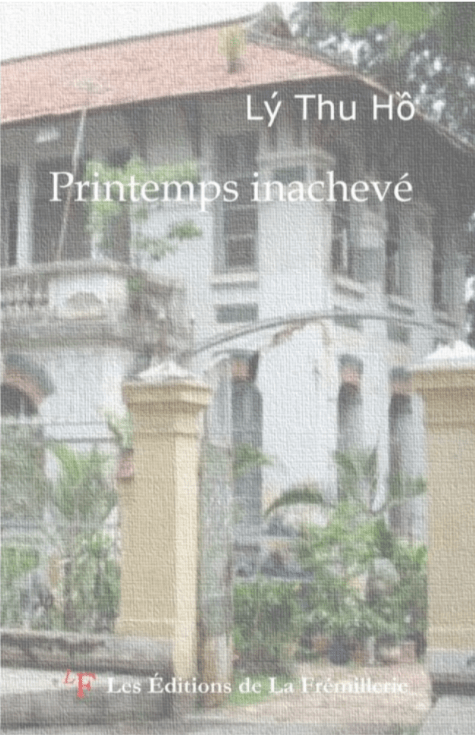
As Vietnam was caught in wartime narrative austerity from the 1950s to the 1970s, followed by the communist state’s intolerance of dissent, Vietnamese writers in the French and American diaspora have offered literary texts that challenge both Vietnamese discursive stricture and dominant perspectives in France and the United States. This essay studies two novel sequences from the diasporic Vietnamese literary archive: Vietnamese French author Ly Thu Ho’s trilogy and Vietnamese American writer Lan Cao’s pair of historical novels. Taking a historicist approach, the essay reveals complex nationalist expressions, aspirations, challenges, and desires in Ly Thu Ho’s and Lan Cao’s works of fiction. 

Read the article: Howie Tam, “Diasporic South Vietnam: Literary Nationalisms in Novels by Ly Thu Ho and Lan Cao”.

Image: Les Editions de la Frémillerie 

New DVAN publishing initiatives

Karl Britto has recently joined the editorial boards of two new publishing initiatives involving The Diasporic Vietnamese Artists Network (DVAN). DVAN is collaborating with Kaya Press to publish diasporic literary works, especially in translation; the first will be an English translation of Line Papin’s Les os des filles, which is slated to appear this year in the Ink & Blood series. DVAN is also collaborating with Texas Tech University Press on a series that will specifically publish Vietnamese and Southeast Asian American novels, memoirs, poetry, anthologies, and graphic novels. 

Read more on these initiatives

Image: Kaya Press/Diasporic Vietnamese Artists Network 

Tess Do featured in New Caledonia press

Tess Do’s research on the Vietnamese diaspora in New Caledonia has been featured in Les Nouvelles Calédoniennes. Tess will soon publish a translation of Jean Vanmai’s Chân Dàng: Les Tonkinois de Calédonie au temps colonial and collaborated with French bande dessinée author, Clément Baloup, on a 2019 visit to the island. There, they met Simone Bui Thi Nhon, the last of the voluntary workers who emigrated from Vietnam during the colonial period.  

Tess also wrote the postface for Baloup’s latest graphic novel in the series Mémoires de Viet-Kieu: Les engagés de la Nouvelle-Calédonie (2020). 

Read more

New publication by Angelica Pisey So: Cambodian Family Albums

This article explores how Franco-Cambodian cartoonist Tian’s graphic novel, L’année du lièvre[Year of the Rabbit], represents second-generation postmemory in the form of, what I call, a “Cambodian family album,” or a personal-collective archive. The album serves to convey to subsequent generations: 1) the history of the Cambodian genocide, 2) the collective memories of pre-1975 Cambodia preceding the Khmer Rouge takeover of Phnom Penh, and 3) the Cambodian humanitarian crisis and exodus of the 1970s-1990s. The conceptualization of the family album is derived from the literal translation, from Khmer into English, of the term “photo album” – “book designated for sticking pictures.” The translation of the term emphasizes the fragmentary and creative nature of postmemory, or the second-generation’s experience of their parents’ trauma. This article begins with an analysis of L’année du lièvreas family album and moves beyond the comics medium to show how Cambodian identity is being reshaped and renegotiated through 1.5- and second-generation Cambodian genocide survivors’ contributions to film, dance, and the literary-arts.  

Read the article: Angelica Pisey So, “Cambodian Family Albums: Tian’s L’année du lièvre” 

Image: Tian/Editions Gallimard 

New publication by Elizabeth Collins: ‘Le Riz d’Indochine’ at the French Table

When the repas gastronomique des Français was deemed worthy of a place on UNESCO’s Representative List of Intangible Cultural Heritage in 2010, the decision was hailed as a triumph for cultural diversity. Yet, culinary traditions in France remain persistently rooted in legacies of colonialism that are invisible to many. With this in mind, this article examines the enduring symbolic power of French cuisine alongside colonial notions of race through an analysis of the tropes and procedures of a 1932 board game doubling as an advertisement for ‘Indochinese Rice’ in France. I argue that just as French citizens learned from the game to incorporate rice into their daily eating habits, they also learned how to integrate visibly racialized Vietnamese people into the national body politic. For not only are citizens ‘buying into’ the colonial project with the help of this piece of publicity, the board game actively teaches racist colonial ideologies. Building on extant analyses of colonial ephemera, this article considers how notions of ‘race’ and racism against the Vietnamese were learned by French citizens through food, and how that racialized understanding would influence the reception and assimilation of the Vietnamese in France in the 20th and 21st centuries. 

Read the article: Elizabeth Collins, “‘Le Riz d’Indochine’ at the French table: representations of food, race and the Vietnamese in a colonial-era board game”

New publication by Karl Britto: ‘Madame, je ne suis pas une jeune fille’

In 1939, Phạm Duy Khiêm volunteered to enlist in the French army, the first and only Vietnamese colonial subject to do so. Before the war, he had studied in Paris at the Lycée Louis-le-Grand and the École normale supérieure, and had already begun to establish himself as an important francophone intellectual and writer. His military service was cut short by France’s surrender, but it nonetheless served as the basis for two autobiographical novels: La Place d’un homme, published soon after the author’s return to colonial Indochina in 1941, and De La Courtine à Vichy, a sequel that was censored by the Vichy regime and that remains unpublished today. While the first text is characterized by the narrator’s sense of honour in defending apparently universal ideals, the sequel is infused with disillusionment and even contempt in the face of French collaboration. Through an analysis of key moments at which race and gender intersect in these texts, this article argues that the narrator’s decision to volunteer reflects a desire for dissolution into an abstract ideal of universal humanity, but that this desire eventually gives way to a form of ambiguous masculinity open to identification with the feminine. 

Read the article: Karl Britto: “‘Madame, je ne suis pas une fille’: Phạm Duy Khiêm’s La Place d’un homme

Image: Phạm Duy Khiêm/Editions PLON 

Recent publication by Jack Yeager: Kim Lefèvre’s White Métisse

In this evocative memoir, Kim Lefèvre recounts her childhood and adolescence growing up in colonial Viet Nam. As a little girl living with her Vietnamese mother, she doesn’t understand the reactions of others toward her, their open mistrust, contempt, and rejection. Though she feels no different from those around her, she comes to understand that to Vietnamese she is living proof of her mother’s moral downfall, a constant and unwelcome reminder of a child conceived with a French soldier out of wedlock. As anticolonial sentiment grows in an atmosphere of rising nationalism, Lefèvre’s situation becomes increasingly precarious.  

Set within a tumultuous period of Franco-Vietnamese history—resistance and revolt, World War II and the Japanese invasion, the first war for independence against the French—White Métisse offers a unique view of watershed events and provides insights into the impact of upheaval and open conflict on families and individuals. Lefèvre’s story captures the instability and daily humiliations of her life and those of other marginalized members of society. Sent by her mother to live with distant family members who view her variously as ungrateful, a bad seed, or “neither gold nor silver,” she is later abandoned in an orphanage with other métissegirls. Lefèvre’s discovery of her own sexuality is overshadowed by her mother’s concerned advice to not repeat the same mistakes she had made, reminding her daughter of the Vietnamese social mores that condemn her very existence. Eventually the challenge and solace of education lead to a scholarship to study in Paris and Lefèvre departs Viet Nam for a new life in France in 1960.  

Part personal memoir, part coming of age story, Lefèvre’s moving account shows the courage and strength of an individual who is able to embrace her hybrid identity and gain self-esteem on her own terms despite living between worlds. White Métisse has been in print in France since its appearance in 1989 and continues to resonate strongly in the universal contexts of immigration, shifting cultural identities, rejection, and assimilation. Now Jack A. Yeager’s elegant translation makes Kim Lefèvre’s compelling memoir available to English-speaking readers. 

Find the book

Read a review of the book

Image: Kim Lefèvre/University of Hawai’i Press 

Alexandra Kurmann and Tess Do contribute to Modern French Identities series

Alexandra Kurmann and Tess Do contributed themed bio-bibliographical vignettes on the Vietnamese-Francophone writers Linda Lê, Anna Moï and Kim Lefèvre to the encyclopaedic edited volume on modern cultural production entitled Le grain de la voix dans le monde anglophone et francophone, whose title alludes to interviews with the theorist, Roland Barthes. The contributions allow for Vietnamese Diaspora writers’ voices and their diverse timbres to be recognised and heard alongside their artistic contemporaries. In particular, the vignettes reveal respectively the liminal, multidisciplinary, and translational qualities of the literary voices of these Francophone women writers. 

Link to the book

Image: Bibliothèque Nationale de France/Peter Lang