New publication by Leslie Barnes et. al: ‘I Love Her Like My Family’; Cinema, Conservation, Cambodia

The Bophana Audiovisual Resource Center opened its doors in Phnom Penh in December 2006, with the aim of collecting and making widely accessible the country’s audiovisual heritage. Since then, it has provided practical training and professional support to hundreds of aspiring archivists, filmmakers and audiovisual technicians. At the same time, it has become a hub for discussion and artistic creation centred on the history, memory and future of Cambodia.

This chapter is a part of a hybrid and dialogic history of the Bophana Center. As a process of co-creation, the telling of this history crosses geographic, temporal, professional and genre boundaries, bringing artists, technicians, academics and audiences together to share their knowledge and lived experience of Cambodia and cinema. This material is thus the product of an unscripted conversation that was recorded, transcribed and rendered in textual form. In it, we explore the intersections of documentary filmmaking, wildlife exploitation, historical trauma and indigenous knowledge, with particular focus on an elephant conservation project managed by the Bophana Center in 2020. Three overarching questions anchor the discussion: Why cinema? What harm? What repair?

More information here.

Paris, qu’as-tu fait de nous?

Paris a accueilli et nourri Pham Van Ky depuis son départ du Vietnam pour ses études à l’étranger. Cette ville a été cruciale dans les réflexions de l’écrivain et est devenu le symbole de sa quête d’harmonie entre l’Orient et l’Occident. Dans le Fonds Pham Van Ky de la Bibliothèque nationale de France sont conservés les tapuscrits d’une vingtaine de romans inédits. Paris, qu’as-tu fait de nous ? est l’un des textes les plus longs. Ce récit prend pour sujet ce que Paris inspire à l’auteur. La conférence, donnée par Giang-HuongNguyen (BnF) et Angelina Guo (ENS de Paris), portera sur l’étude de ce roman inédit et sur les aspects de (ré)conciliation entre l’Orient et l’Occident qui y sont abordés.

Le 6 février, dans le cadre du séminaire « France-Vietnam : un portail entre entre les cultures », NGUYEN Giang Huong  (BnF)​ et Angelina Guo(ENS de Paris) ont consacré une conférence sur l’écrivain Pham Van Ky et son manuscrit, Paris, qu’as-tu fait de nous ?

Trouver le programme annuel des séances sur le site de la BNF.

ASERN at the MLA 2025 in New Orleans

2025 marks the fiftieth anniversary of the official end of the Second Indochina War and the solidification of Communist regimes in Cambodia, Laos, and Vietnam. 1975 also ushered in waves of Southeast Asian refugee and other migrant movements, establishing new communities around the world, including in Australia, Canada, France, and the US.         

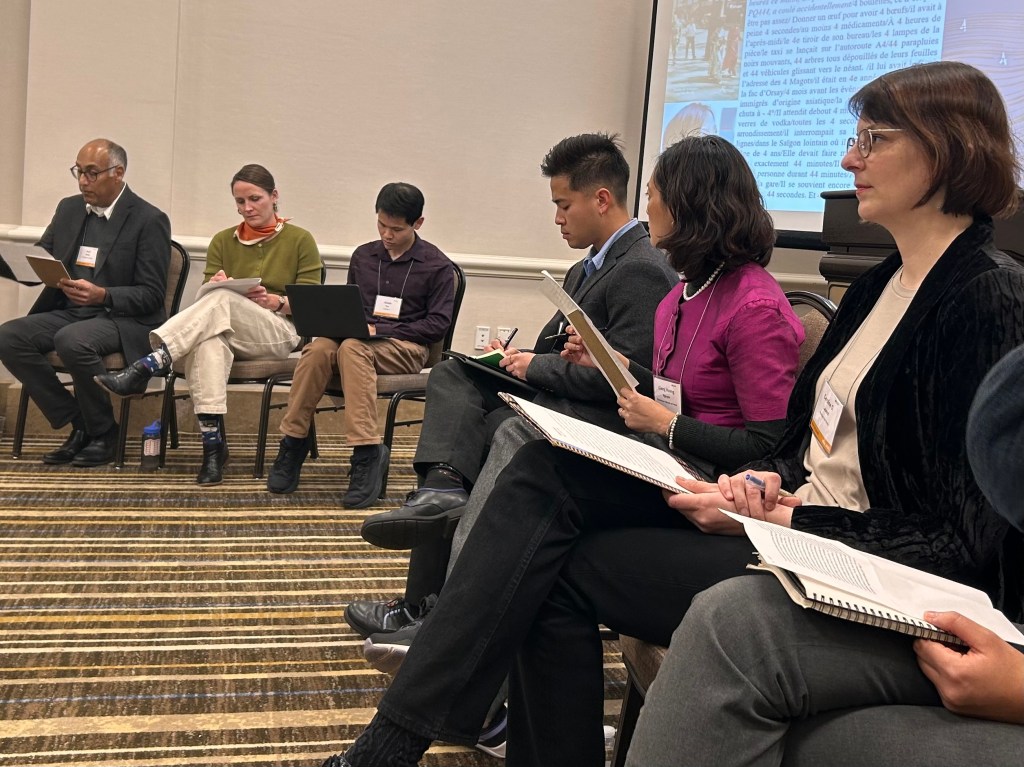
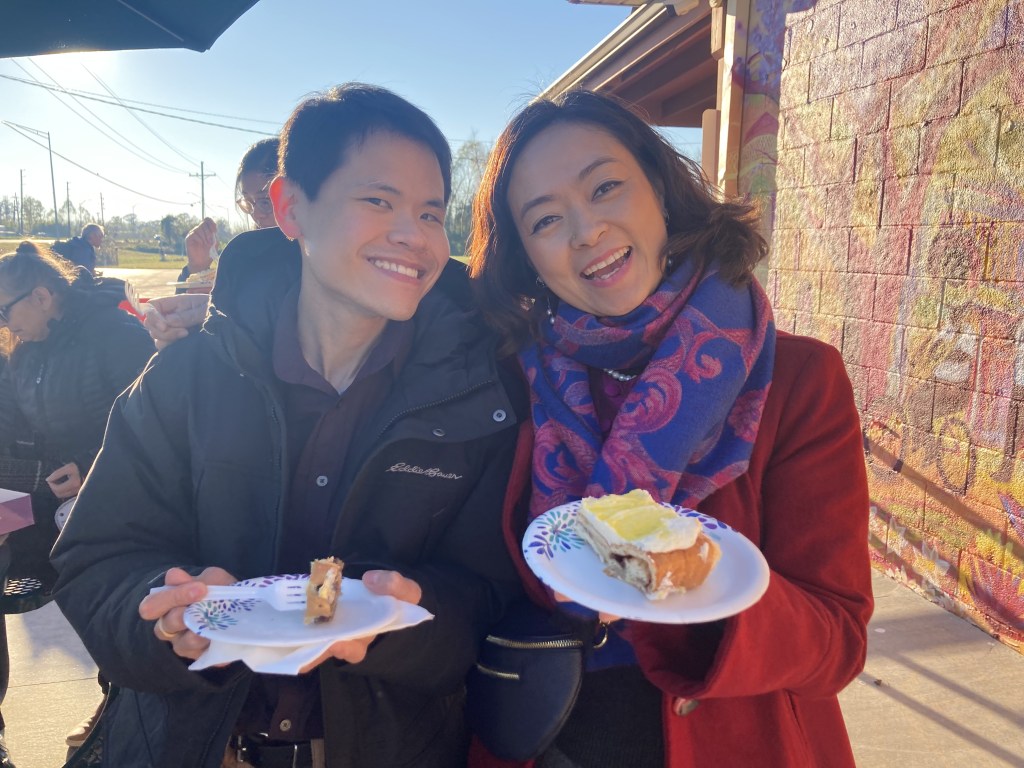
In January, ASERN came together in an MLA roundtable to revisit 1975 as a nodal point and to reflect on the legacies of war and trauma in communities both national and diasporic. With a general focus on cultural production in French, we looked at some of the trajectories of imperialism and migration that link France, Southeast Asia, and the United States, evoking different intersecting histories of 1975 and beyond, and the disciplines and representational strategies that have arisen to grapple with the legacies of these histories. Immediately after the panel, we took a field trip to Dong Phuong bakery in New Orleans East to sample the Vietnamese version of the New Orleans king cake, which is itself an American take on the French galette des rois.

Indochine 70 ans après les Accords de Génève

Le 21 juillet 1954, la signature des accords de Genève scelle l’indépendance du Vietnam, du Laos et du Cambodge. Pour le Vietnam proprement dit, ce n’est qu’en 1975 que le Nord et le Sud se réunifient en un seul État. Que reste-t-il de l’Indochine dans la mémoire collective 70 ans après l’armistice ? Que connaît-on du Vietnam après 50 ans de réunification ?

Opening the 2024-2025 ‘France-Vietnam’ series at the Bibliothèque Nationale de France, this session hosted by Giáng Hương featured historian, Alain Ruscio in dialogue with Doan Bui, journalist with Le Nouvel Observateur.

More details on the series here.

New publication by Elizabeth Collins: “#AsiatiquesDeFrance”

Anti-Asian racism and violence have escalated around the world, coinciding with the start of the COVID-19 pandemic. Yet, in France, racially motivated violence against people perceived as “Asian” was already on the rise, even before the pandemic. Frustrated by the lack of public outrage and the inaction of government authorities, people of Asian heritage in France – who have come from a diverse range of countries, over several generations – have begun mobilizing collectively in new and more ambitious ways. Young people, in particular, have taken to the internet. Using social media platforms, they have not only organized in-person events, including protest marches in central Paris that have numbered in the tens of thousands of people, but have also cultivated online communities focusing on racial solidarity with just as many followers. Social media accounts, hashtags, YouTube webseries, podcasts, and internet-based projects aiming to combat anti-Asian racism while also promoting intersectional racial justice, have thus proliferated in the past few years. This article examines a few prominent examples of these works, including the viral video “#AsiatiquesDeFrance” (2017), to argue that all of these forms convey common messages that deal explicitly with issues of cultural assimilation, national belonging, racial othering, and racism faced by people of Asian heritage in France.

Find the article here.

(Image: France TV)

ASERN in the Routledge Handbook for the Vietnamese Diaspora

Nathalie Huỳnh Châu Nguyễn’s comprehensive Routledge Handbook of the Vietnamese Diaspora has just come out, with seven chapters from six ASERN colleagues:

-“Documentary film memorialisation of Vietnamese indentured labour in France and New Caledonia: Sighting history,” by Alexandra Kurmann and Tess Do

-“Linda Lê: Migrant Writer M/other,” by Leslie Barnes

-“The transdiasporic turn towards multiplicity in contemporary Francophone and American Việt Kiều literature,” by Alexandra Kurmann

-“Ghostly brothers and spectral relations in Vietnamese diasporic literature,” by Catherine H. Nguyen

-“Diasporic Vietnamese metafiction of the 1.5 and second generations,” by H. J. Tam

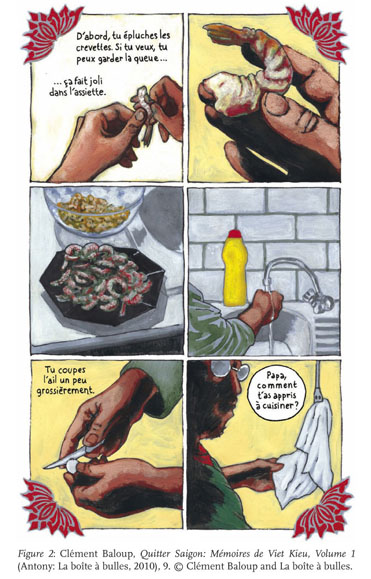
-“Reading for food in diasporic Vietnamese narrative cookbooks,” by Elizabeth M. Collins

The volume promises to be an excellent resource for researchers and students of the Vietnamese diaspora. Further details about the volume here.

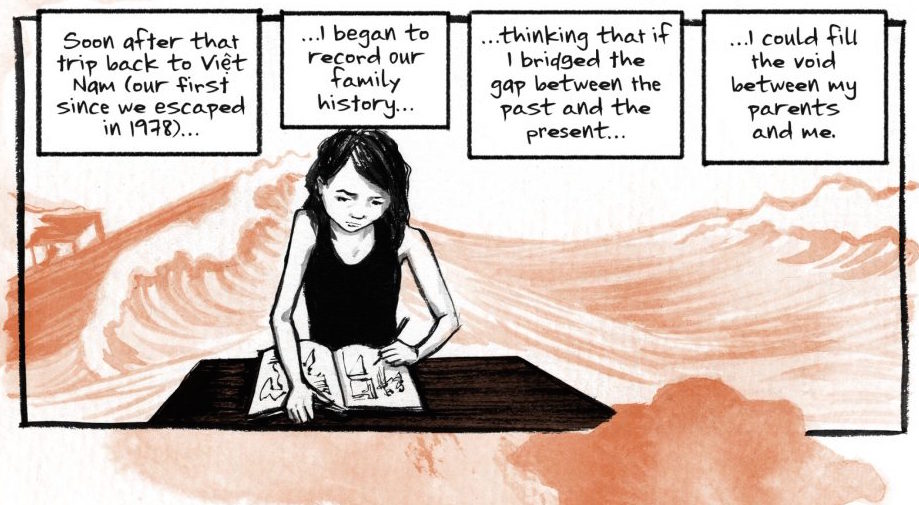
(Image: Thi Bui, The Best We Could Do, 2017)

Linda Lê (1963-2022)

ASERN members Tess Do, Jack Yeager, and Leslie Barnes have co-edited a volume of essays on Linda Lê as a tribute to the author’s career and a gesture of gratitude for the community of readers her writing created. The volume includes articles by other ASERN members, including a study of Lê’s translations into English and Vietnamese, co-authored by Tess Do and Catherine Nguyen, a re-examination of Calomnies by Howie Tam, and a study of Anglophone intertextuality in Lê’s work by Alexandra Kurmann. The volume features new voices and long-time critics of Lê’s work and contains an experimental translation of Lê’s Le complexe de Caliban by Siân Robyns. An afterword, “Dear Departed,” written by Leslie Barnes and first published in Mekong Review in 2022 (7:28), draws on Lê’s work, personal reflection, and private correspondance with colleagues to reflect on the enduring impact of Lê’s literary legacy.

The volume traces new directions in the scholarship on Lê while contributing to broader conversations around subjects like diaspora, refugeehood, reception, animality, and metafiction.

Linda Lê: In memoriam, Esprit Créateur 63:4 (2023)

New publication by Karl Britto: Stories Told and Untold. Graham Greene’s The Quiet American and Anna Möi’s Le Vénin du papillon

Many fundamental aspects of literary narrative raise questions of power, agency, and authority.  One might consider, for example, the relationship between a narrator and a character, the transformation of speech into written dialogue, or the often unacknowledged role of translation in the staging of cultural and linguistic difference.  Narrators may assert their own authority to represent the words, thoughts, and desires of characters, and this authority may or may not recognize the particular forms of ethical responsibility inherent in the act of narrating the experience of another.  On the other hand, narrators may take a radically different position with respect to this responsibility by refusing to speak in the place of characters, representing instead what might be at stake in a story that remains untold.

            Such issues of authority and responsibility arise with particular intensity in narratives of war, especially those that seek to represent the experiences of characters whose vulnerability is heightened by political and military violence.  In this article, I examine two quite different narrators who address aspects of gendered and racialized experience in mid-twentieth-century Vietnam: Thomas Fowler, the jaded British journalist who narrates Graham Greene’s The Quiet American (1955), and the unnamed narrator of Anna Moï’s Le Venin du papillon (2017).  I focus on the choices these narrators make as they portray variously exploitative relations between Vietnamese female characters and European or American men, relations that are of course situated against the broader backdrop of violence during this period of overlap and eventual transition from French colonial rule to American military intervention.  What might close attention to the details of language and form reveal about the practices that bring Vietnamese women into these narratives, or that instead speak in their place?

Find the essay here.

ASERN at the Society for French Studies

In 2015, Jennifer Howell observed that Vietnamese writers are often overlooked by Francophone specialists, receiving, proportionally to other postcolonial minorities, less attention in Francophone studies and often missing from important collective volumes on Francophone postcolonial studies. This can be explained by the way the Indochina war is positioned in the French espace mémoriel, the heterogeneity of the Việt Kiều community, the lack of visibility of Southeast Asians migrants and their descendants in public discourses about minorities in France, and/or the perception of the Asian community as being a model minority. However, all lead to disregarding the numerous potentialities that this specific memorial and geographical space can bring to the development of a truly global field of French Studies.  

The aim of Caroline D. Laurent’s two-part panel, “Transcultural francophonies: Southeast Asian Perspectives in French Studies,” was to redress this lack through a focus on the literary, graphic, and artistic works of the francophone Việt Kiều community. The panel, which included contributions from ASERN members, Elizabeth Collins and Leslie Barnes, sought to demonstrate how systematically incorporating Southeast Asian perspectives into French Studies could open engaging transnational and transcultural avenues for research and permit the inclusion of diasporic memory into national narratives.