New publication by Elizabeth Collins: “#AsiatiquesDeFrance”

Anti-Asian racism and violence have escalated around the world, coinciding with the start of the COVID-19 pandemic. Yet, in France, racially motivated violence against people perceived as “Asian” was already on the rise, even before the pandemic. Frustrated by the lack of public outrage and the inaction of government authorities, people of Asian heritage in France – who have come from a diverse range of countries, over several generations – have begun mobilizing collectively in new and more ambitious ways. Young people, in particular, have taken to the internet. Using social media platforms, they have not only organized in-person events, including protest marches in central Paris that have numbered in the tens of thousands of people, but have also cultivated online communities focusing on racial solidarity with just as many followers. Social media accounts, hashtags, YouTube webseries, podcasts, and internet-based projects aiming to combat anti-Asian racism while also promoting intersectional racial justice, have thus proliferated in the past few years. This article examines a few prominent examples of these works, including the viral video “#AsiatiquesDeFrance” (2017), to argue that all of these forms convey common messages that deal explicitly with issues of cultural assimilation, national belonging, racial othering, and racism faced by people of Asian heritage in France.

Find the article here.

(Image: France TV)
ASERN in the Routledge Handbook for the Vietnamese Diaspora

Nathalie Huỳnh Châu Nguyễn’s comprehensive Routledge Handbook of the Vietnamese Diaspora has just come out, with seven chapters from six ASERN colleagues:

-“Documentary film memorialisation of Vietnamese indentured labour in France and New Caledonia: Sighting history,” by Alexandra Kurmann and Tess Do

-“Linda Lê: Migrant Writer M/other,” by Leslie Barnes

-“The transdiasporic turn towards multiplicity in contemporary Francophone and American Việt Kiều literature,” by Alexandra Kurmann

-“Ghostly brothers and spectral relations in Vietnamese diasporic literature,” by Catherine H. Nguyen

-“Diasporic Vietnamese metafiction of the 1.5 and second generations,” by H. J. Tam

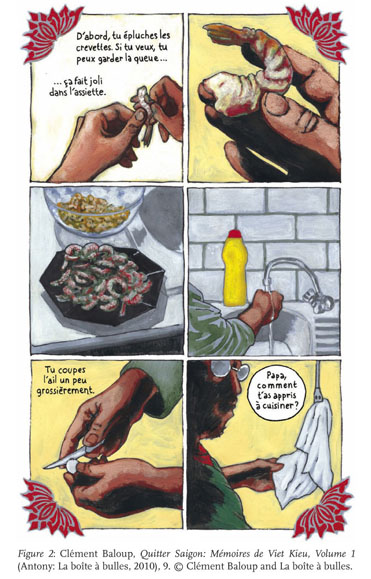
-“Reading for food in diasporic Vietnamese narrative cookbooks,” by Elizabeth M. Collins

The volume promises to be an excellent resource for researchers and students of the Vietnamese diaspora. Further details about the volume here.

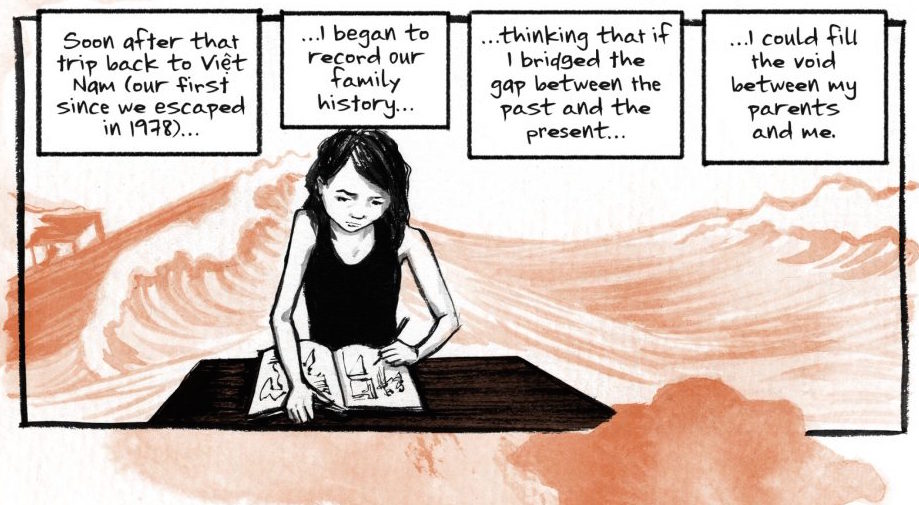
(Image: Thi Bui, The Best We Could Do, 2017)

Linda Lê (1963-2022)

ASERN members Tess Do, Jack Yeager, and Leslie Barnes have co-edited a volume of essays on Linda Lê as a tribute to the author’s career and a gesture of gratitude for the community of readers her writing created. The volume includes articles by other ASERN members, including a study of Lê’s translations into English and Vietnamese, co-authored by Tess Do and Catherine Nguyen, a re-examination of Calomnies by Howie Tam, and a study of Anglophone intertextuality in Lê’s work by Alexandra Kurmann. The volume features new voices and long-time critics of Lê’s work and contains an experimental translation of Lê’s Le complexe de Caliban by Siân Robyns. An afterword, “Dear Departed,” written by Leslie Barnes and first published in Mekong Review in 2022 (7:28), draws on Lê’s work, personal reflection, and private correspondance with colleagues to reflect on the enduring impact of Lê’s literary legacy.

The volume traces new directions in the scholarship on Lê while contributing to broader conversations around subjects like diaspora, refugeehood, reception, animality, and metafiction.

Linda Lê: In memoriam, Esprit Créateur 63:4 (2023)

New publication by Karl Britto: Stories Told and Untold. Graham Greene’s The Quiet American and Anna Möi’s Le Vénin du papillon

Many fundamental aspects of literary narrative raise questions of power, agency, and authority.  One might consider, for example, the relationship between a narrator and a character, the transformation of speech into written dialogue, or the often unacknowledged role of translation in the staging of cultural and linguistic difference.  Narrators may assert their own authority to represent the words, thoughts, and desires of characters, and this authority may or may not recognize the particular forms of ethical responsibility inherent in the act of narrating the experience of another.  On the other hand, narrators may take a radically different position with respect to this responsibility by refusing to speak in the place of characters, representing instead what might be at stake in a story that remains untold.

            Such issues of authority and responsibility arise with particular intensity in narratives of war, especially those that seek to represent the experiences of characters whose vulnerability is heightened by political and military violence.  In this article, I examine two quite different narrators who address aspects of gendered and racialized experience in mid-twentieth-century Vietnam: Thomas Fowler, the jaded British journalist who narrates Graham Greene’s The Quiet American (1955), and the unnamed narrator of Anna Moï’s Le Venin du papillon (2017).  I focus on the choices these narrators make as they portray variously exploitative relations between Vietnamese female characters and European or American men, relations that are of course situated against the broader backdrop of violence during this period of overlap and eventual transition from French colonial rule to American military intervention.  What might close attention to the details of language and form reveal about the practices that bring Vietnamese women into these narratives, or that instead speak in their place?

Find the essay here.

ASERN at the Society for French Studies

In 2015, Jennifer Howell observed that Vietnamese writers are often overlooked by Francophone specialists, receiving, proportionally to other postcolonial minorities, less attention in Francophone studies and often missing from important collective volumes on Francophone postcolonial studies. This can be explained by the way the Indochina war is positioned in the French espace mémoriel, the heterogeneity of the Việt Kiều community, the lack of visibility of Southeast Asians migrants and their descendants in public discourses about minorities in France, and/or the perception of the Asian community as being a model minority. However, all lead to disregarding the numerous potentialities that this specific memorial and geographical space can bring to the development of a truly global field of French Studies.  

The aim of Caroline D. Laurent’s two-part panel, “Transcultural francophonies: Southeast Asian Perspectives in French Studies,” was to redress this lack through a focus on the literary, graphic, and artistic works of the francophone Việt Kiều community. The panel, which included contributions from ASERN members, Elizabeth Collins and Leslie Barnes, sought to demonstrate how systematically incorporating Southeast Asian perspectives into French Studies could open engaging transnational and transcultural avenues for research and permit the inclusion of diasporic memory into national narratives.

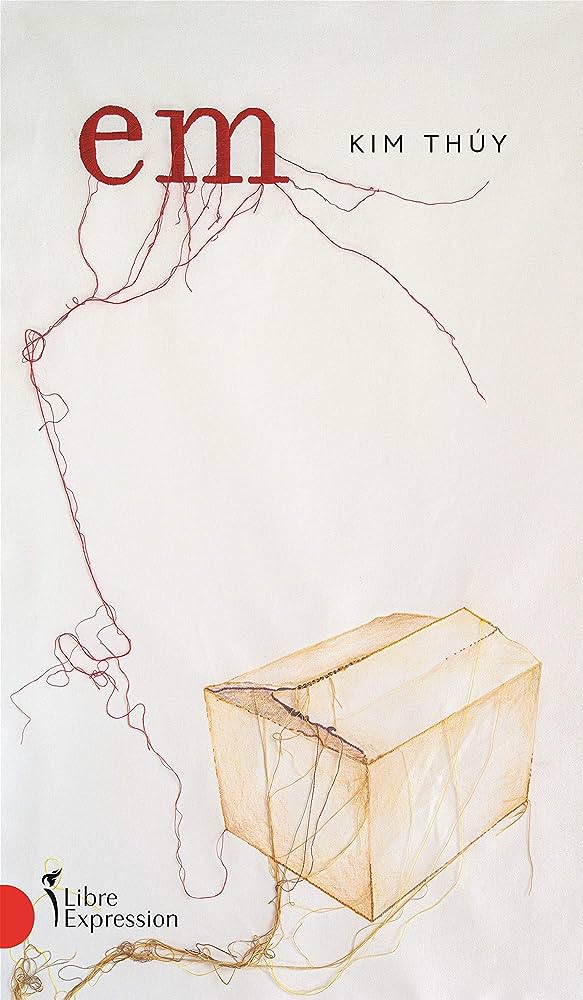
New publication by Jack Yeager: Touching Beauty. The Poetics of Kim Thuy

Kim Thúy is a literary phenomenon, rising in her first decade of writing to a level of international recognition that few Québécois writers ever attain. The Vietnamese-born author’s novels have garnered literary prize recognition and have been translated from French into twenty-nine languages in nearly forty countries.

Touching Beauty, which includes chapters from ASERN members Jack Yeager and Nguyễn Giáng Hương, is the first collection to focus solely on Thúy and her economical yet poetic storytelling style that expresses both the traumatic and the beautiful. Her writings, which manage to be culturally specific all while speaking to the fundamentals of the human condition, are examined within the context of what is known as migrant literature in Canada and are situated within the history of Vietnamese literature in French that grew out of the colonial period. Chapters explore food, identity, gender, and the role of writing in Thúy’s life and work. Thúy herself contributes an unpublished poem and an extended interview that focus on her ongoing struggle to find, and write, beauty amidst war, migration, poverty, and loss.

Touching Beauty maps the themes that have, to date, animated a literary career of global relevance and enduring value and encourages a deeper appreciation of Thúy’s writing.

Find the book.

New publication by Leslie Barnes: French Colonial Literature in Indochina

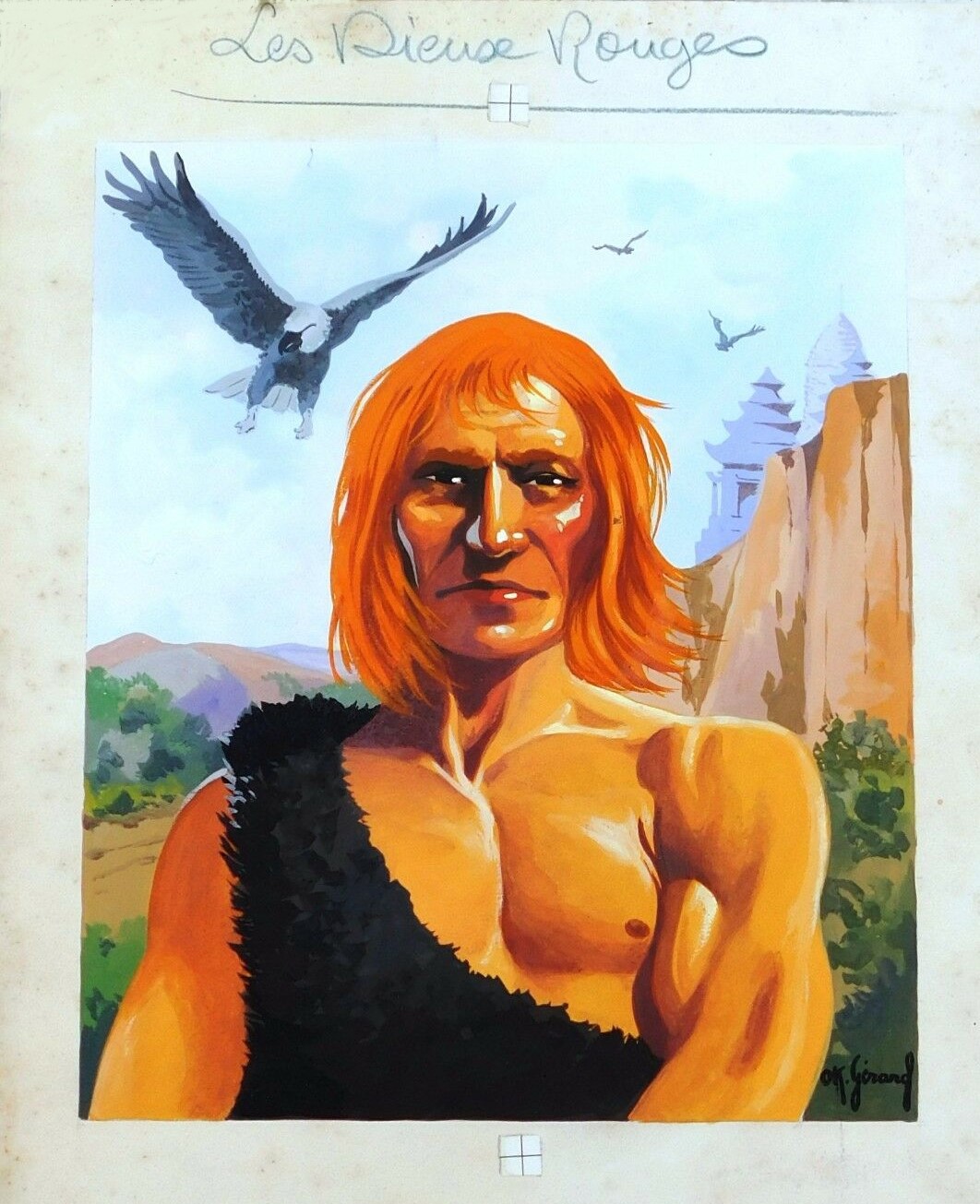
This essay draws on Pheng Cheah’s insights in What is a World? to examine the contrasting spatiotemporalities of colonial adventure and continental drift in French Indochinese colonial-exotic literature of the 1920s and 1930s. I look first at how the genre worlds in a narrow, linear sense, discursively mapping the spatialized colony in concert with imperialist projections. The focus here is on the ways in which these novels chart the advance of capital through the colony as a spatial category, a distant and subordinate appendage of France, the global center. I then consider Jean d’Esme’s Les Dieux rouges (The Red Gods: A Romance, 1923) as a deviation from the conventions of the genre and the calculated path it lays out. Equal parts colonial-exotic and speculative fiction, Les Dieux rouges tells an alternative geological history of continental drift that undoes the colonizer’s materialist assumptions about the natural world. Through the creation of a parallel, prehistoric world inside the colony but outside the reach of empire, D’Esme’s novel demonstrates a profound dis-ease with the colonial project, an anxiety that, unlike the hesitation that marked many narratives of the period, points to France’s ultimate inability to map Indochina – physically, temporally, or epistemologically – and by extension, the rest of la plus grande FranceLes Dieux rouges worlds the colony in the Heideggerian sense by opening up an alternative temporality within it, by imagining, in Cheah’s words, “a force that subtends and exceeds all human calculations that reduce the world as temporal structure to the sum of objects in space” (8). The novel returns the colonizer to the beginning of human time and the human race, not to imply simply that colonialism is a regression, but to challenge the ontological and political realities upon which imperialist assumptions are based.

See the Cambridge History of World Literature.

Image: llustration d’O.K. Gérard pour la couverture du roman de Jean d’Esme, Les Dieux rouges, Les Éditions de France, collection « Le Livre d’Aujourd’hui », 1932 (Wikimedia commons).

Elizabeth Collins wins Best article prize for “‘Le Riz d’Indochine'”

Congratulations to Elizabeth Collins, who has won Modern and Contemporary France‘s Best article prize for 2022! Elizabeth’s brilliant article, “‘Le Riz d’Indochine’ at the French table: representations of food, race and the Vietnamese in a colonial-era board game” is described by the jury as “theoretically versatile and innovative, convincing in its ethical perspective and self-awareness.”

See the announcement and click through to the article here.